
Collecting Vintage & Costume Jewelry: A Complete Guide
How to identify, value, and care for vintage jewelry — and make sense of an inherited jewelry box — from fine gold and gemstones to signed designer costume pieces.
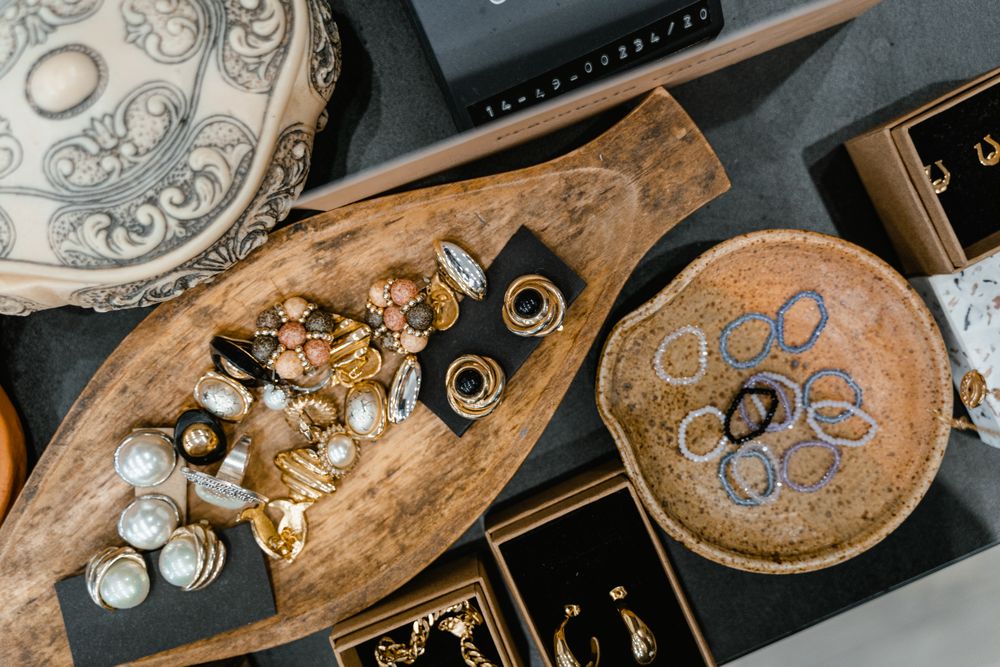
Few collectibles are inherited as often as jewelry — and few are as widely misjudged. A jewelry box passed down through a family can hold real gold and gemstones, a collectible signed designer brooch, or a drawer of pretty-but-modest costume pieces, and they often look alike at a glance. Knowing how to tell them apart, and what drives value in each, is the heart of collecting vintage jewelry. This guide covers identification, value, condition, and care, with the inherited-collection case in mind throughout.
Fine vs. costume: the first distinction
The most important split is between fine jewelry — made of precious metals (gold, silver, platinum) and genuine gemstones — and costume (fashion) jewelry, made of base metals, plated finishes, glass, rhinestones, and early plastics like Bakelite. Fine jewelry carries intrinsic material value; costume jewelry is valued for its design, maker, and collectibility. Both can be worth real money, but for very different reasons, so identifying which you have comes first.
Signatures, hallmarks & maker’s marks
Turn a piece over and look for marks. On fine jewelry, hallmarks indicate metal content — 14K, 18K, 750, 925, or “sterling.” On costume jewelry, a designer signature — Trifari, Coro, Miriam Haskell, Eisenberg, and many others — can dramatically raise value over an unsigned equivalent. Learn the marks for the pieces you collect; a signature or hallmark is often the single biggest clue to what something is and what it’s worth.
What drives value
Jewelry value comes from maker, materials, era and style, craftsmanship, rarity, and condition, plus current demand. A signed designer piece in pristine shape, a well-made Art Deco ring, or a genuine gemstone in a quality setting all command premiums for different reasons. As with any collectible, condition and originality run through everything — a damaged or heavily repaired piece is worth far less than the same item intact.
Want a transparent estimate for a single piece? Try our free value estimator →
Real or costume? How to tell
A few checks separate precious from costume. Hallmarks are the first tell. Weight helps — gold and silver feel denser than plated base metal. Look at how stones are set: genuine gems are usually prong-set in quality pieces, while glued-in stones suggest costume. None of these is conclusive on its own — plating, fakes, and clever costume pieces all exist — so for anything that might be valuable, get a professional test or appraisal before you assume.
Condition, care & authentication
Condition is a major value factor: missing stones, worn plating, broken clasps, and amateur repairs all reduce a piece’s worth. Be alert to authentication issues too — faked designer signatures, reproductions, and “marriages” (parts from different pieces assembled together). For care, store pieces separately so they can’t scratch each other, keep them dry and away from perfume and chemicals, and resist aggressive cleaning, which can damage finishes and soft stones.
Making sense of an inherited jewelry box
Inherited a jewelry box and unsure what’s in it? Resist two opposite mistakes: assuming everything is precious, and assuming the costume pieces are worthless. Sort methodically — separate marked precious-metal pieces from unmarked and costume, note signatures and hallmarks, and photograph everything before anything gets separated or cleaned. Get the potentially valuable pieces professionally tested or appraised, and remember that a signed costume brooch can outsell a thin gold chain. A careful pass beats both guessing and discarding.
Cataloging & managing your collection
Jewelry collections are made of many small, valuable, easily-confused pieces — a mix of fine and costume, signed and unsigned — and the details that drive value (hallmarks, signatures, materials, condition, and appraised value) are easy to lose track of. A dedicated collection manager keeps a per-piece record with photos, marks, condition notes, and AI-assisted valuations in one insurance-ready place, turning an inherited box or a lifetime collection into a documented, defensible inventory.
Frequently asked questions
Is my old or inherited jewelry worth anything?
It depends entirely on what it is. Pieces made of real gold, silver, or gemstones carry intrinsic value even when the design is modest. Signed designer costume jewelry can be surprisingly collectible. But plenty of old jewelry is modest in value, and age alone does not make a piece valuable. The only way to know is to identify each piece — material, maker, era, and condition — rather than assume.
How do I tell if jewelry is real gold or costume?
Start with the hallmarks: marks like 14K, 18K, 750, 925, or "sterling" indicate precious metal, while their absence often (not always) points to costume. Real gold and silver also tend to feel heavier than plated base metal. These are clues, not proof — plating and fakes exist — so for anything that might be valuable, have it tested or appraised by a professional jeweler or gemologist.
Does costume jewelry have any value?
Yes — sometimes a great deal. Signed designer costume jewelry (names like Trifari, Coro, Miriam Haskell, Eisenberg, and materials like Bakelite) is actively collected, and strong examples can outsell modest gold pieces. With costume jewelry, the maker, design, materials, and condition matter far more than the metal content.
What makes vintage jewelry valuable?
A combination of factors: the maker or designer (signed pieces command premiums), the materials (precious metals and genuine gemstones versus base metal and glass), the era and style, craftsmanship, rarity, and condition. Demand matters too — certain designers and periods are more sought-after than others. The interplay of these factors, not any single one, sets value.
How should I store and care for a jewelry collection?
Store pieces separately in soft pouches or a lined box so they cannot scratch one another, keep them dry and away from chemicals and perfume (which tarnish metals and damage stones), and use anti-tarnish strips for silver. Keep a documented inventory with photos, hallmarks, and current values — essential for insurance and estate planning, and exactly what a collection manager like Relicara provides.
Catalog your jewelry with confidence
Track hallmarks, signatures, materials, condition, and AI-powered valuations — and keep insurance-ready records for every piece.
Start your free collection