
Collecting Stamps: A Complete Guide
How to start, identify, value, and care for a stamp collection — and how to make sense of an inherited one — from condition and catalog values to errors and expertization.
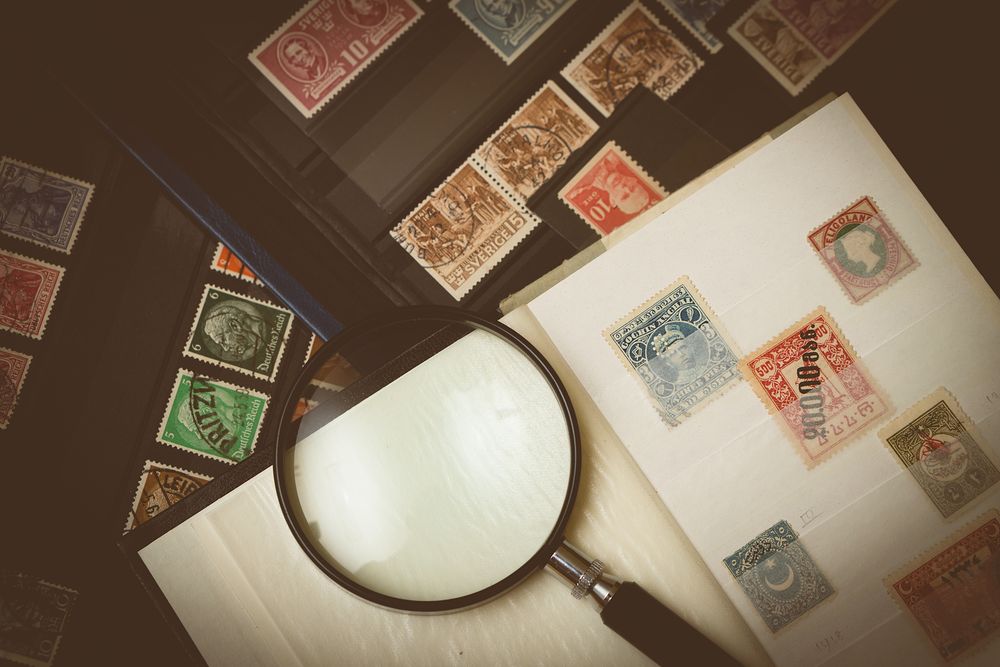
Stamp collecting — philately — is one of the oldest and deepest collecting hobbies, and one of the most commonly inherited. A shoebox or album passed down from a relative can hold anything from pure sentiment to a genuine rarity, and telling the difference comes down to a few core skills: identifying what you have, judging condition honestly, understanding what catalog values really mean, and documenting it all. This guide covers each, with the inherited-collection case in mind throughout.
What stamp collectors collect
The field is broad. Some collectors focus on a single country or era; others collect topically (birds, ships, space) across the world. Beyond individual stamps, many collect covers (whole envelopes) and postal history, where the routing, cancellations, and markings tell a story. The most successful collectors specialize rather than buying broadly — depth builds the expertise that protects you and makes a collection coherent.
Condition: centering, gum & faults
Condition drives stamp value more than almost anything. The big factor is centering — how evenly the design sits within its perforations — which separates an average stamp from a premium one. For mint stamps, the gum matters: “mint never hinged” (MNH), with undisturbed original gum, commands a premium over hinged examples. And faults — thins, tears, creases, toning, or short perforations — sharply reduce value. Learn to grade honestly before you buy or sell.
Deep dive: MNH vs. hinged — what gum condition means for value →
Catalog value vs. market value
Stamps are identified by catalog number in standard references — Scott (US), Stanley Gibbons (UK), Michel (Germany), Yvert (France). These catalogs also list a value, but that is a relative guide and identifier, not a sale price: real market value is typically a fraction of catalog, and varies with condition and demand. Treat catalog value as a starting reference, then check actual recent sales for the issue and grade you are looking at.
Want a transparent estimate for a single item? Try our free value estimator →
Errors, varieties & the high end
The biggest prices in philately belong to errors and varieties: inverted centers (the famous Inverted Jenny), missing colors, imperforate pairs, and watermark or perforation varieties. These are scarce by nature and prized by specialists. They are also the most faked, so the higher the claimed value, the more scrutiny — and independent expertization — a stamp deserves.
Deep dive: stamp errors & varieties and what they’re worth →
Authentication & expertization
For valuable stamps, a certificate from a recognized expertizing body is the standard of proof. Experts check that a stamp is genuine and unaltered — watching for regumming (fake original gum), repairs to faults, reperforation, and faked cancellations or overprints. Buy high-value material with a current certificate, or budget to have it expertized; it protects both value and resale.
Making sense of an inherited collection
Inherited a collection and not sure where to start? First, do no harm: don’t soak stamps off paper, peel them from album pages, or apply tape — you can erase value in seconds. Then organize by country and era, identify items by catalog number, and note condition. Most inherited collections are mostly common material with occasional better items, so a methodical pass — and an expert opinion on anything that looks special — beats both throwing it away and assuming it’s a windfall.
Storage & care
Handle stamps only with stamp tongs, never fingers, and mount them with proper hinges or clear mounts in a stockbook or album — never glue or household tape. Keep humidity and temperature stable (damp makes stamps stick and paper tone), and protect everything from direct sunlight, which fades color. Good storage preserves condition, and condition is value.
Cataloging & managing your collection
Stamp collections grow into the thousands, and the details that drive value — country, catalog number, condition, gum, and current value — are impossible to hold in your head. A dedicated collection manager keeps a per-item record with photos, condition notes, and AI-assisted valuations in one insurance-ready place — turning an inherited shoebox or a lifetime album into a documented, defensible collection.
Frequently asked questions
Are old stamps worth anything?
Most common stamps are worth very little — they were printed in the millions. Value concentrates in genuinely scarce issues, strong condition, errors and varieties, and sought-after countries or topics. Inherited collections are a mixed bag: usually mostly common material with the occasional better item, which is exactly why cataloging and a careful look (or an expert eye) matter before you assume it is worthless — or a fortune.
What makes a stamp valuable?
Rarity, condition, and demand. For condition, centering (how evenly the design sits within the perforations), the gum on mint stamps, and the absence of faults like thins, tears, creases, or toning all drive price. Errors and varieties — inverts, missing colors, imperforates — command the biggest premiums. A common stamp in superb condition can outsell a scarcer one that is damaged.
Is a mint or used stamp worth more?
It depends on the stamp. Many issues are worth more mint, especially "mint never hinged" (MNH) — original gum, never mounted with a hinge. But for plenty of classic issues a genuine used example, or a stamp on its original cover (envelope) with an interesting cancellation or postal history, is worth more than the mint version. Never assume; check the specific issue.
How do I value an inherited stamp collection?
Start by doing no harm: do not soak stamps off paper, peel them from album pages, or apply tape — you can destroy value in seconds. Then organize by country and era, identify items by catalog number, and note condition. Use catalog values (Scott, Stanley Gibbons, etc.) as a relative guide, not a sale price — the market is typically a fraction of catalog. For any potentially high-value item, get an expert certificate before selling. A collection manager makes the cataloging and valuation tractable.
How should I store and handle stamps?
Handle stamps only with stamp tongs (never fingers), and mount them with proper hinges or clear mounts in a stockbook or album — never glue or household tape. Keep everything in stable, moderate humidity and temperature (damp causes stamps to stick and paper to tone), and out of direct sunlight, which fades color. A documented inventory with photos and values keeps the collection insurance-ready.
Catalog your stamps with confidence
Track condition, catalog numbers, and AI-powered valuations — and keep insurance-ready records for every stamp.
Start your free collection