

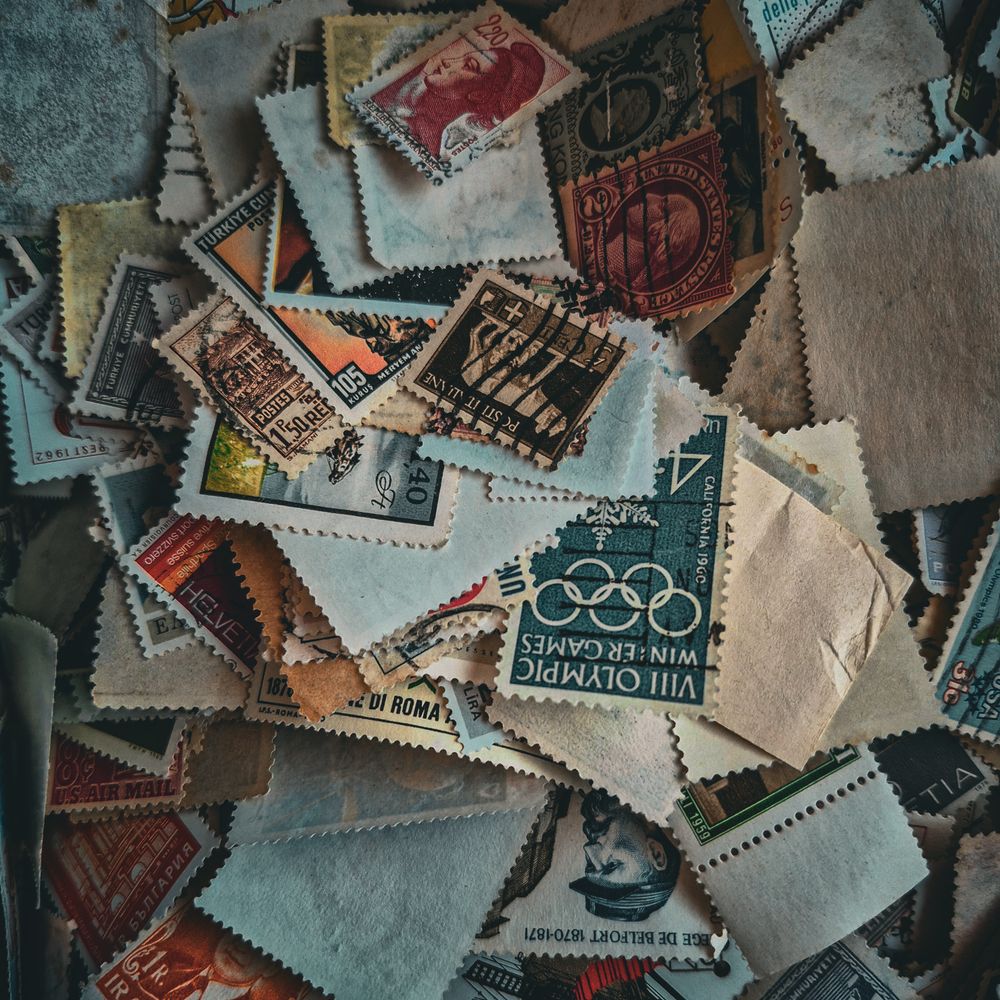
If you have inherited a stamp collection, you are probably wondering two things: is it worth anything, and what do I do with it? Before you sell it, toss it, or start pulling stamps apart, take a breath. A methodical approach will tell you what you actually have — and the wrong moves can destroy value before you ever find out.
Part of our Stamp Collecting Guide. This is a deep dive on one topic from our complete resource for collectors. Read the full Stamp Collecting Guide →
First, do no harm
The fastest way to lose money is to “tidy up” a collection the wrong way. Don’t soak stamps off envelopes (some are worth more on the original cover, and soaking can ruin them), don’t peel stamps from album pages or hinges, and never apply tape or glue. Handle stamps with stamp tongs rather than fingers. If in doubt, leave it exactly as you found it until you know more.
Get the lay of the land
Start by sorting at a high level: albums, stockbooks, loose stamps, and covers (whole envelopes). Group by country and rough era. You are not valuing yet — you are building a map. Note anything that looks old, unusual, or carefully mounted, since collectors tend to give their best material the most care.
Identify stamps by catalog number
Stamps are identified by catalog number in standard references — Scott (used widely in the US), Stanley Gibbons (British Commonwealth), Michel (Europe), and Yvert (France). Matching a stamp to its catalog number tells you exactly what it is, which printing, and what to compare it against. This is the single most useful skill for assessing an inherited collection.
Catalog value vs. what it will actually sell for
Here is the part that trips people up: catalog value is a relative guide, not a sale price. The market typically pays a fraction of catalog for common material, and catalogs assign a minimum value to even the most ordinary stamps — so a collection with a huge “catalog value” can still be worth modest money. Use catalog numbers to identify and rank items, then check actual recent sales for the better ones.
Find the items worth a closer look
- Classic-era stamps (roughly pre-1940), which are scarcer and more condition-sensitive.
- High individual catalog values — the few stamps that stand out from the bulk.
- Mint never-hinged examples and well-centered stamps.
- Errors and varieties (inverts, missing colors, imperforates).
- Covers with interesting cancellations or postal history.
- Better countries and “back of the book” material (airmails, officials, and the like).
When to get a professional opinion
For anything that looks genuinely valuable, get an expert opinion before selling. Reputable dealers and auction houses can assess material, and recognized expertizing bodies issue certificates that authenticate high-value stamps. The cost is worth it: a certificate protects value and makes the item far easier to sell. A big part of judging value is condition — especially gum, which we cover in MNH vs. hinged stamps.
Decide, document, and protect
Once you know what you have, you can decide: keep and build on it, sell (privately, through a dealer, or at auction), or simply insure and hold. Whatever you choose, document it — photos, catalog numbers, condition, and values. Relicara turns an inherited shoebox into an organized, insurance-ready record, and makes selling or passing it on far simpler down the road.