
Militaria for Sale: How to Find, Value, and Authenticate WWII Collectibles
The market for military memorabilia has never been more active. From seasoned historians to first-time buyers drawn in by a family heirloom, militaria collecting spans a remarkably wide spectrum of motivations — and an equally wide range of price points. Whether you’re hunting for a specific WWII medal, building a uniform collection, or considering selling pieces you’ve inherited, understanding how to navigate this market is essential.
This guide covers everything you need to know: what qualifies as militaria, where to buy and sell it, how to authenticate pieces, and how modern tools like Relicara are changing the way collectors approach valuation.
Part of our Militaria Collecting Guide. This article is one chapter in our complete resource for military collectibles. Read the full Militaria Collecting Guide →
What Is Militaria? A Broad and Fascinating Category
Militaria is a broad term that encompasses any object with a direct military origin or association. The category is far wider than most people assume. Common types of militaria include:
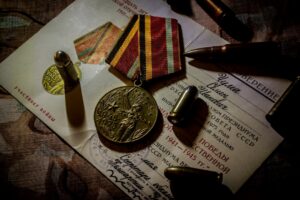
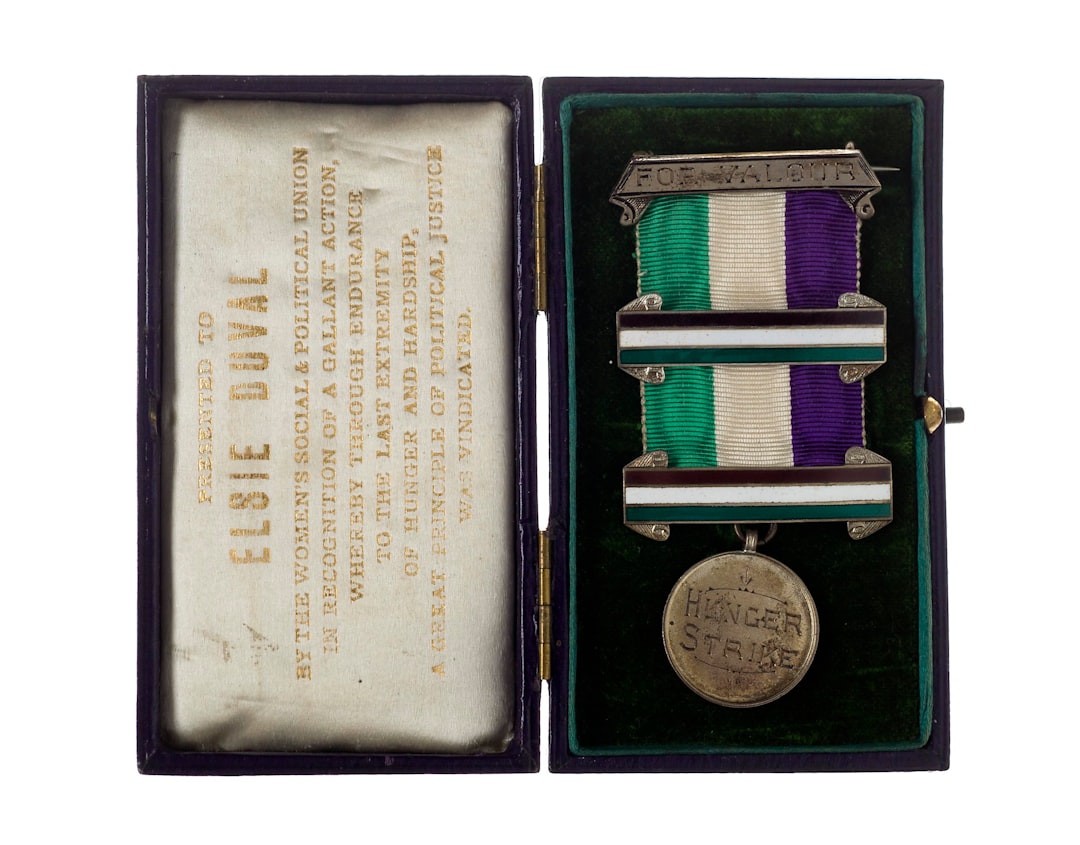
- Medals and decorations — campaign medals, valor awards, unit citations, and service ribbons. These are among the most consistently traded militaria items and range from common campaign medals worth a few dollars to rare gallantry awards commanding tens of thousands.
- Uniforms and insignia — complete dress or field uniforms, caps, helmets, shoulder patches, rank insignia, and branch-specific badges. Condition and completeness are everything here.
- Edged weapons — bayonets, combat knives, officer swords, and daggers. German Third Reich daggers and Japanese military swords (nihonto) are perennially sought after.
- Firearms and field equipment — militaria auctions regularly include deactivated rifles, pistols, and service revolvers alongside canteens, packs, map cases, and field tools.
- Documents and ephemera — discharge papers, service records, unit photographs, propaganda posters, and military maps. Paperwork directly tied to a named soldier adds significant provenance value.
- Propaganda and printed material — wartime posters, ration books, recruitment flyers, and official publications are increasingly collectible as primary historical documents.
WWII collectibles in particular dominate the militaria market. The conflict’s scale, global reach, and cultural significance means material survives across nearly every nation and theater — Allied and Axis alike — creating an almost inexhaustible supply of historically significant pieces.
Where to Buy and Sell Militaria
Finding legitimate militaria for sale requires knowing where to look — and who to trust. The market spans several distinct channels:
Auction Houses
Established auction houses — both specialist and generalist — remain the most transparent venue for high-value militaria. Houses like Rock Island Auction Company, Hermann Historica, and Antique & Collectible Arms specialize in military material and attract serious bidders globally. Major generalist houses including Sotheby’s and Christie’s periodically handle museum-quality pieces. Auction results are publicly recorded, giving buyers and sellers access to real market pricing.
Specialist Dealers
Reputable militaria dealers offer curated inventory and often provide detailed provenance research. Many operate at militaria shows — events like the Baltimore Antique Arms Show or the Max Militaria Show in the UK — where buyers can inspect items in person. Established dealers typically stand behind the authenticity of their inventory and are a safer option for significant purchases.
Online Platforms
Online marketplaces have dramatically expanded access to militaria for sale, but they carry proportionally greater risk. eBay remains the largest volume platform; Catawiki and Invaluable serve the mid-to-high tier. Specialist forums and Facebook groups connect buyers directly with sellers, often at more competitive prices — but due diligence falls entirely on the buyer.
Militaria Shows and Gun Shows
In-person shows offer the critical advantage of physical inspection. Handling a medal, examining a uniform’s stitching, or reviewing document paper quality in person reveals details that photographs conceal. Regional shows are a starting point; national events attract the highest-quality dealers and material.
How to Spot Fakes and Verify Authenticity
Reproduction and outright fakes are a persistent problem in the militaria market. The more desirable a category — Third Reich items, high-grade Allied valor awards, Japanese militaria — the more sophisticated the forgeries tend to be. Here’s how experienced collectors approach authentication:
Physical Inspection
Authentic militaria shows wear consistent with its stated age and use. Look for natural patination on metals, period-appropriate thread and fabric construction, and hardware consistent with wartime manufacturing standards. Reproduction items often feel slightly off — inconsistent weight, machine-perfect stitching where hand-stitching would have been used, or modern plating over base metal.
Maker’s Marks and Manufacturer Codes
Authentic pieces from WWII-era production typically carry manufacturer codes, acceptance stamps (known as Waffenamt stamps on German items), or maker’s marks that can be cross-referenced with published reference works. Reference books specific to your niche — Jürgen Görtz for German medals, for example — are invaluable authentication tools.
Provenance Documentation
A clear ownership history is the strongest single authentication factor. Discharge papers naming a specific soldier, a photograph of the piece being worn or used, and auction house records all add credibility. Provenance doesn’t guarantee authenticity, but its absence should always prompt additional scrutiny.
Expert Opinion
For significant purchases, commissioning a formal authentication opinion from a recognized specialist is worthwhile. Specialist auction houses and established dealers often provide this service for a fee. The cost is negligible relative to the price difference between an authentic piece and a discovered fake.
Pricing Factors: What Determines Militaria Value
Militaria valuation is multifactorial. No two pieces are truly equivalent, and pricing reflects a complex interaction of variables:
Rarity — How many examples are known to exist? A common Allied campaign medal struck in the millions is fundamentally different from a rare regimental award or a medal group awarded for a unique action.
Provenance — Can the item be traced to a specific individual, unit, or event? Named medals — those engraved or stamped with the recipient’s name and number — command substantial premiums over unnamed equivalents.
Condition — Militaria grading mirrors the coin and paper money world: original finish and minimal wear command the highest prices. For uniforms, completeness matters as much as condition.
Conflict era — Broadly, earlier conflicts and rarer theaters generate stronger collector interest. Pre-WWI material, specific WWII theaters like the Pacific or North Africa, and rare Cold War-era items all carry premiums over more common material.
Current demand — Collector interest shifts. Certain categories — U.S. Special Forces material, airborne insignia, fighter pilot awards — cycle in and out of peak demand. Market timing affects realized prices even for identical pieces.
Understanding these variables precisely is where most collectors struggle. Without access to recent comparable sales data, pricing is largely subjective.
AI Valuation for Militaria: How Relicara Changes the Game
Traditional militaria valuation has always depended on an expert’s memory of past sales, access to auction archives, or expensive appraisals. Relicara’s AI-powered valuation platform changes this dynamic fundamentally.
Rather than relying on static price guides or outdated reference tables, Relicara aggregates real-time sales data from auction houses, dealer platforms, and private sales to generate dynamic pricing context for individual militaria items. Enter a description of your piece — the type, conflict era, condition, and any known provenance — and Relicara returns current market comps, trend data, and an estimated value range.
For collectors building a militaria portfolio, Relicara’s tracking tools provide a living inventory: record acquisition costs, attach photographs and documentation, log provenance details, and monitor how market values evolve over time. This isn’t just useful for buying decisions — it’s essential for insurance coverage, estate planning, and informed selling.
The platform handles the full breadth of militaria categories — medals and decorations, uniforms, edged weapons, documents, and more — with category-specific valuation models trained on militaria market data. Whether you’re tracking a single inherited medal or a comprehensive collection spanning multiple conflicts, Relicara provides the market intelligence that previously required years of specialist experience.
Start Tracking and Valuing Your Militaria Collection Today
The militaria market rewards informed buyers and sellers. Whether you’re sourcing WWII collectibles through auction, a specialist dealer, or an online platform, having accurate, real-time valuation data changes every transaction in your favor.
Relicara is built for collectors who take their collections seriously. Track every piece, document your provenance, and access AI-powered pricing context whenever you need it — no appraisal appointments, no outdated price guides, no guesswork.
Create your free Relicara account and start valuing your militaria collection today →
Already tracking a collection? Log in to your dashboard to add your militaria pieces and run valuations on your existing inventory.